So, I figure: what better way to get everything off of my
‘To Do’ list than by taking time out to write one last blog entry about my
Parisian experience? I mean, doing so has
been looming over my head—sure, it’s not as important as my midterm essays,
but…
Aww, screw it!
Who
am I kidding? I just want to put the academics away for a bit and focus on some
of the fun things I’ve done recently. Plus, I want to blog about my Moroccan
adventure, but can’t until I finish with France.
With that said, let’s get right down to it:
On 20 February 2012, after leaving the Eiffel Tower, I made
my way to Père Lachaise Cemetery.
That’s right, I spent part of my holiday in the world’s (ostensibly) most
romantic city in a cemetery—in fact, it’s such a big cemetery, and there were so
many people to ‘visit’ that I wound up going back on the 21st prior
to boarding the bus back to London. (In all fairness, the second trip was more
the result of logistics—Père Lachaise
is only one metro stop away from the bus station.)
Amongst the 1,000,000 bodies who are interred at Père Lachaise are
some of the world’s most notable authors and artists. Since I don’t
personally know anyone buried there, it was obviously these famous figures that
I was interested in.
So who’d I see, you ask? Well, let’s see…
The first one I found was Isadora Duncan. Now, I confess
that I don’t really know much about Ms. Duncan beyond the fact that she was a
famous dancer. However, I had heard Nic talk about her before, and so I knew
she was someone important to him. With that in mind, I crossed my fingers and
tried the camera again, hoping there would be enough ‘juice’ left in the
battery to get at least a photo for him—miraculously, not only did it give me
enough power to snag the photo of Ms. Duncan’s burial spot, but also all of the
others that followed over the next two days! Success!
 |
| NB: This is not my photo! |

After Ms. Duncan, I made my way to the next ‘big’ name on my
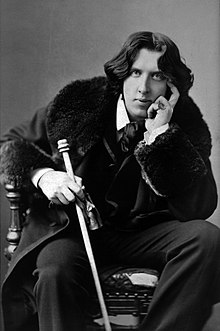
list: that queer, literary mastermind Oscar Wilde. Now, you’ll notice that
there’s a plastic casing surrounding his marker. That’s because there was a
tradition of people donning lipstick and kissing/writing messages on the stone.
After a while, this began to take its toll on the gravesite, and so they’ve
enclosed it within said-protective plastic. I didn’t have any lipstick on me
(and had no clue how to ask for some in French), so I just took a quick
self-photo alongside the resting
place of Dorian Gray’s creator.
 |
| NB: This is not my photo! |
 |
| Exhausted and praying the camera doesn't die! |
Next up: Edith Piaf. Most Americans only know of Ms. Piaf through her famous song ‘La Vie En Rose’ (and admittedly, that
was my first exposure to her). But she also led an incredibly fascinating and
tragic life. Also, for the record, I like ‘Jezebel’ a bit more than the earlier
mentioned song.
 |
| The lyrics to 'Le Vie En Rose' are on the green sheet. |
Sarah Bernhardt was next. As with Isadora Duncan, my connection
to Ms. Bernhardt is a bit more tangential. I knew that she was a silent-movie era actress known
for being overly dramatic, but the main draw here (for me) was that we used to
refer to my little sister as ‘little Miss Sarah Bernhardt’ when she would throw
temper-tantrums and whatnot. (Although, according to my Mom, she called my
sister that because her own grandparents had called her that at the same age.)

The other two graves I visited on the 20th—Jim Morrison and Frederic Chopin—weren’t ones that I necessarily ‘cared’ about per se. I just felt like I should since
I was there.
 |
| NB: This is not my photo! |

 |
| NB: This is not my photo! |

Shortly after finding Mr. Chopin’s grave, I was kicked out
of the cemetery because it was closing time. This was done by a creepy guy who
just appeared out of nowhere while I was walking between some graves and told
me that the sun was setting and I would have to leave. Not totally convinced
that he wasn’t part of the walking dead himself, I did as instructed, returning
to the hostel on painfully sore feet—there was certainly no going back out that
night because I could barely stand, and so I just watched the French version of
‘Cops’ (which focuses on firefighters instead).
As I mentioned before, I didn’t have much time on the 21st
to do anything, and so I returned to Père
Lachaise for my last hour or two in Paris. This enabled me to snag some of
the interred folks I had looked for but was unable to find the day before. That
day’s batch included:
The world’s most famous mime—Marcel Marceau—who I remember
mostly from I Love Lucy (though I
can’t find any record of him ever appearing on there, so maybe they just talked
about him?)
 |
| NB: This is not my photo! |

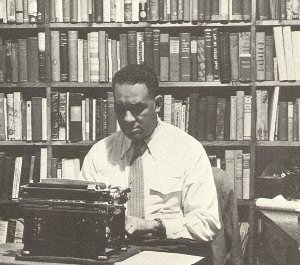
Mr. Marceau was followed by Richard Wright, the author of Native Son. I actually just read Native Son last semester for my Fiction I
class, and it’s an amazing book (albeit very difficult to get through—but then,
that’s part of what makes it so amazing). Mr. Wright also shared a friendship
(for a time) with another American author living in Paris whose work I read
last semester: James Baldwin. (Still more interesting is that Mr. Baldwin wrote
Giovanni’s Room, after which my
Parisian hostel was named.) Sadly, Mr. Wright’s ashes are interred in a very
inaccessible, easy to overlook spot beside a staircase.
 |
| NB: This is not my photo! |

Quite by accident, I stumbled upon the painter Max Ernst’s
resting place as I was walking away from Mr. Wright’s.
 |
| NB: This is not my photo! |

And finally, I found the frustratingly elusive last two on
my list: Gertrude Stein and Alice B. Toklas, the world’s most famous literary
lesbians—
Sorry, I have to interrupt for a moment to do this:
“They were quite regularly gay
there, Helen Furr and Georgine Skeene, they were regularly gay there where they
were gay. They were very regularly gay. To be regularly gay was to do every day
the gay thing that they did every day. To be regularly gay was to end every day
at the same time after they had been regularly gay. They were regularly gay.
They were gay every day. They ended every day in the same way, at the same
time, and they had been every day regularly gay…” ~ Stein, “Miss Furr and Miss
Skeene”
—Now, admittedly, I’m not a fan of Stein’s work (which I quoted above). But, I cannot detract from the headway she made in the world in terms of living an openly gay life.
In that vein, I was surprised at first to find Ms. Stein
buried by herself. It was well known, even while they were living, that she and
Ms. Toklas were living together as partners-in-life. And yet, Ms. Toklas was
nowhere to be found.
At first I was very upset—how could they have separated them at the end?
But then, as I was walking away, something caught my eye:
Ms. Toklas’ information actually was listed on the stone (albeit on the back), meaning
that they were buried together.
Crisis solved, and now I could have my Awwww
moment, followed by my professing my sincerest thanks for my predecessors’
(including Wilde’s and Baldwin’s) efforts to make my life today a little easier.
 |
| Stein (l) and Toklas (r). [NB: This is not my photo!] |
 |
| Stein's Side |
 |
| Toklas' Side |
Also worth noting at Père
Lachaise were the memorials seen below. I found them to be incredibly
striking in their grotesqueness, especially when hit by the setting sun.
 |

And so, for all intents and purposes, my trip to Paris comes
to a close. Fitting, I think, to do so with an entry dedicated to a cemetery.
In case you were wondering (which you probably weren’t), nothing all that
interesting happened on the ride back to London. There was a bit of drama at
the border (one guy was detained, and I almost missed the bus because I was
stuck at the back of the line), but in the end I made it!
Will I ever return? I wouldn’t necessarily rush back, but I
wouldn’t turn down the opportunity either. However, I did fall in love with Montmartre,
and I really enjoyed the Louvre and what I saw of the Pompidou—ooh, and the crepes!—and so I would definitely
return to those parts of Paris!


