Showing posts with label Cultural Studies. Show all posts

Thursday, April 5, 2012

Morocco: Goodbye, Sahara! I'll Be Back!


It was so warm beneath the mountain of furry blankets in my desert tent—I didn’t want to get up on 10 March. Nonetheless, I had a modicum of hope that I’d be able to catch the sunrise. Little did I know when I finally cast aside my blankets that the sun had been up for quite a while. Ah, well.

Around the same time, one of our hosts poked his head into our tent and informed us that breakfast was ready (another good excuse for getting up). So, after taking a few minutes to brush away the rum-, smoke-, and sleep-induced fuzz from our teeth, and then taking a few more moments to absorb the stunning starkness of our campsite and surroundings by daylight, we made our way once more to the dining tent.

Campsite
Two of the four beds in my tent. Mine is the one on the right, next to my bookbag. (The blankets are all piled on top of J. in another bed, in an effort to wake him up.)

 Breakfast was rather simple compared to the meal we had the night before, but delicious nonetheless. It consisted of bread, some kind of thick but creamy sweet-butter, apricot jam, and coffee.

Now, gurl, lemme tell you ’bout the jam and the coffee: Best. Damn. Coffee. And. Jam. Ever. 

Well, okay, in all honesty the coffee wasn’t the best ever—merely the best I’ve had since leaving the States. But the jam…my goodness, was it amazing! 

I’m not typically a fan of jellied things. (Stop right there—get your minds out of the damned gutter!) For as long as I can recall, I’ve eaten peanut butter and butter sandwiches because the texture of grape jelly grosses me out. Orange marmalade, in very small doses, is occasionally permissibly on hot, fresh morning biscuits, but that’s about it. 

During my desert excursion, however, I discovered that bread was merely a vessel for the consumption of apricot jam! First I went back for seconds…then thirds…and then, oh yes, I went back for forthsies. And don’t think that I didn’t take the last piece of bread during that final trip, because I damn well did.

At any rate, after breakfast it was time to get ready to head out, sadly. We returned to our tents and started to pack-up. I also asked JM to help me re-tie my tagelmust (which is a skill I still have not mastered even with the help of YouTube videos), resulting in the picture below.

Tagelmust: Before Photo


Now, I point out how my tagelmust looks here because, as you will soon see, it looked nothing like this only a short while later…

Which brings us to the next part of the story: Camel Ride (Part II). 

Sadly, by the time I made it to the area where our camels were housed for the return-trip, Coco had already been claimed by someone else in the group…meaning I had to settle for a different mount this time. But I didn’t name this camel. Why, you ask? Well, there are two reasons. 

First and foremost, for some inexplicable reason I had the song ‘A Horse With No Name’ stuck in my head. Now, I don’t think I’ve heard that song all the way through but once in my life, so what prompted its presence in my head that day is beyond me! Nonetheless, it was there, and so it seemed fitting at the time not to name my ride (despite the fact that he was camel and not a horse). 

The second reason I didn’t name my camel is because he was a bad camel. But since I didn’t hate him enough to send him to the glue factory (or whatever the equivalent is for camels) I did the next best thing: I stripped him of his identity by denying him a name. 

Now, I know that sounds harsh—way harsh—but you need to understand: he would not allow the saddle to be secured properly, meaning that every time I tried to reposition myself and give ‘the boys’ some comfort, the entire saddle would shift and I risked falling off. At one point, the guides actually made me dismount him completely so they could re-tie the saddle, but he must have been puffing up his belly or something, because it was even worse after that. 

Bruised cajones = bad camel.
 
Fortunately, the trip to where we met the bus was shorter than the trip to the campsite—only about 20 or 30 minutes. But it was a rough trip! I was jostled about so much that my poor tagelmust became hopelessly undone, and I couldn’t take my hand off the saddle’s yolk long enough to even attempt fixing it properly. This is why, in the ensuing pictures you see from this part of the trip, it looks like a ’fro-meets-thundercloud-meets-alien-thing is hanging over my head.

Of course, despite the bumping and jostling, after seeing one of my friends light-up while riding I couldn’t pass up the opportunity to indulge in a Camel while on a camel.

See what I mean about the tagelmust being a wreck!

This was its own hilarity-filled experience—have you ever tried to light a cigarette while rocking every which way on a relatively wild animal? (So help me, I just know that one of my gay friends is going to have a smart-ass answer to that question!) I’m surprised I still have eyebrows left. But I did it…

Watch out for the eyebrows!

 When I finally saw the bus it was a bittersweet moment. On one hand I was beyond thrilled to get off of my nameless camel. But, on the other hand, I was saddened that my time in the Sahara was already at an end.

There was still one final hurdle between us and departure, however: a group of children. 


[Image Courtesy of NJ and SP]

I look like some horrible taskmaster, don’t I? Or at the very least like a tourist who’s totally oblivious to the circumstances of his own life compared to those around him. At least that’s how I’m terribly afraid people will read it. 

And yet, in some regards, I secretly want people to have that knee-jerk reaction because maybe it will force them to interrogate their own social positions, which is why I’m posting it here like this. (Though, admittedly, a better way of inducing such reflection might be simply to encourage others to read Peggy McIntosh’s incredibly insightful and eye-opening White Privilege: Unpacking the Invisible Knapsack.) 

With that said, let me now give you the back story:

Yes, children—all trying to sell us homemade camels made out of palm fronds. 

What you’re actually seeing in the picture above is the look of someone (me) who’s incredibly uncomfortable and conflicted. I wanted to help them all, but knew that I couldn’t, so I gave a few of them some money (without taking the things they were selling so that they could hopefully sell them to someone else) and started toward the bus. 

Unfortunately, a gaggle of these kids was blocking my way, trying to sell their wares to my friends who had boarded already. I stood there behind them, both trying to make my way on and also smiling nervously because…well, I smile when I’m uncomfortable, and I was discomfited by the recognitions running through my head of all of the privileges I have in life compared to these children (e.g., the fact that I was able to spontaneously drop a not-inconsiderable sum on an excursion to an area that at least some of those kids will probably never leave). 

And, it was in that moment that my friend took the above photo.

Moving away from the heavy (albeit incredibly important) stuff, once aboard the bus we began the long trek home. There isn’t too much to say about the trip back—the only times we stopped really were at a couple of vistas, and twice for food (the first time at a place I never caught the name of and the second time in Ouarzazate). 

Yup, that's a real-life oasis behind me.

Tagelmust fixed (more or less).


We finally made it back to Marrakech at around 6 PM, at which point we moved en masse toward Djamaa el-Fna before saying our sad goodbyes. I would love to think that one day we will cross paths again.

Afterwards, I made my way back to Waka Waka, where I rejoined the Djellaba Crew on the rooftop. Once again, they immediately pulled me, and made me feel like I hadn’t missed a second.

You know, that’s one of the really incredible things about my time in Morocco—I feel like there were these long stretches of time that just came to an absolute standstill around me, so that you could just soak it all in. It was kind of like that whole ‘perfect moment’ scene from Star Trek: Insurrection. (And yes, I’m aware that from a critical Orientalist perspective that statement kind of plays into the whole ‘exotic-erotic’ myth, but the bit about time seeming to stand still for me is indescribable any other way!)

At any rate, three or four hours (and a few glasses of wine and smokes) later, we made our way back to Djamaa el-Fna for dinner at one of the stalls that’s set-up each night.

It really was a beautiful, fun-filled evening—perfect for my last night in Morocco!

Saturday, March 24, 2012

Casual Over-Drinks Topics...


There’s not too much to talk about at the moment, but I figured I should do a quick entry just to highlight a couple of things that I’ve done over the last week.

Tuesday night (20 March) I traveled to Leytonstone—birthplace of Sirs Alfred Hitchcock and Derek Jacobi—in order to meet-up with two UEL students, JA and GC, for drinks. The peers in question are both thesis-level Cultural Studies students who occasionally pop into my horrid ‘Culture, Power and Resistance in the Twenty-First Century’ class. One of them (JA) also happens to be the UEL student that came to Columbia last year. We met up at the Red Lion (which I think might be affiliated with the pub I went to with K&M on my second night here), and spent a lovely couple of hours catching up over beer and cider. We chatted about everything from white privilege and racism in Europe, to the failings of abstinence-only education in the U.S., to the attempted privitization of England’s healthcare system. You know, casual over-drinks topics…for Cultural Studies students at least.

Tuesday night wasn’t my only stab at being social this week. Last night (23 March) I happened to catch a Facebook update from another friend, AH, that he was stuck at Victoria Station, waiting for a train to take him back home (which is about an hour away). Now, I’ve ‘known’ AH online for around 13 years—we’ve been part of the same He-Man/She-Ra community since the mid- to late-1990s—but we’ve never actually met before. (Namely because of the ocean which separates us.) So, upon spotting this update, a hurried flurry of messages were exchanged, and plans were made to finally meet up in person while he waited for his rescheduled train. A short while later, and we were finally greeting one another face-to-face.

Me and AH at Victoria Station

Since AH had a couple of hours before his train was scheduled to depart, we nipped over to the Duke of York, a pub not far from the station. This was actually my first experience meeting another He-Fan/She-Raver in person—everyone’s so spread out in the States that it’s hard to do so—and I loved every second of it. It was so surreal: two grown, 30(ish) year-old men—in a dark, noisy bar surrounded by stumbling heterosexuals trying to dance to ‘Hot in Here’ (and the men suggestively removing their suitcoats)—talking about everything from the father/daughter relationship between Hordak and She-Ra, to what kinds of material the Four Horsemen will use to design Scorpia’s tail, to the role of the Filmation series in producing a generation of really swell, inclusivity-minded people. You know, casual over-drinks topics…for He-Fans/She-Ravers at least.

Beyond those two bits of excitement, there’s really not too much else to tell. This week’s kind of flown by (and, honestly, I wish it would slow down)! I’m housesitting for K&M at the moment, and keeping their delightful dog Bowmar company. I’m loving every second of the peace and quiet here. I hadn't realize how stressed out I’d become living in the other house until I came here, but I suddenly find myself very relaxed.

Of course, part of the stress I’m feeling might have more to do with midterms than the constant thumpa-thumpa at my flat. Basically, our entire grade comes down to two grades: our final (60%) and our midterm (40%). Oh, and they do not award 100% over here, the rationale being that if your work warrants 100% then you should already be a teacher. Realistically, the highest score most students earn is about 75%. So, basically, my midterms have to be spot-on if I want to try to maintain my 4.0!

Fortunately, midterm madness is almost over. One of them (‘Realism, Fantasy & Utopia’) was due last week, and the other two are due this week—followed by two glorious weeks of Easter Break (yes, it's called Easter Break here), during which time I hope to visit Scotland!!!! 

And then we go straight into working on our finals, because there's only like 5 weeks left of the actual semester following Easter Break.

Two final things I want to mention, but which don’t really fit anywhere else:

First, yesterday was a gorgeous day! Mind you, this is still London, so of course there was a curtain of smog blanketing the skyline—I have yet to see a day that is both sunny and clear—but I’ll take what I can get! It was simply too nice restrict myself to the indoors all day, so after class I ran to K&M’s house, spent some time with Bowmar, grabbed the laptop, and headed to a coffee shop in Soho. The place was called LJ’s CoffeeHouse, and my choice to go there was pretty random: I simply wanted somewhere that was open-air and had free wifi, and this is where Google directed me. After visiting their website, however, I also became smitten with LJ’s through the following ‘prayer’ posted on their site (and which I can totes relate to):

Caffeine is my shepherd; I shall not doze.
It maketh me to wake in green pastures:
It leadeth me beyond the sleeping masses.
It restoreth my buzz:
It leadeth me in the path of conciousness for its name's sake.
Yea, though I walk through the valley of the shadow of addiction,
I will fear no equal.
For thou art with me, thy sweetness and thy crema they comfort me.
Thou preparest a carafe before me in the presence of my barista:
Thou anointest my day with pep; my mug runneth over.
Surely richness and taste shall follow me all the days of my life:
And I will dwell in the house of LJ's forever.

The service was only decent (though very friendly), but the coffee and the atmosphere as a whole were excellent. The gay Sohoians seemed to come alive, renewed by the sun’s warmth. People were so happy and pleasant, and it all jived perfectly with the mood I was in. (It was not, however, conducive to working—I spent 90% of my time there just chatting with Nic over the interwebs.)

Secondly—and containing spoilers (consider yourself warned)—I was saddened to learn on Thursday night that ‘Eastenders’ had killed off one of my favorite characters, George-Michael-obsessive Heather Trott (Cheryl Fergison). Alongside the Dot, Kim, and Shirley characters, Heather was one of my favorites. And the way in which she died—and the status of her relationships with best-friend Shirley and her murderer at the time—is just too sad. And sadly, it seems as if the U.K. soaps don’t bring back characters from the dead in the way the U.S. soaps do. Ah, well—I’ll miss you, Heather, but at least I can find some of your shenanigans on YouTube still: 


Until next time…

Tuesday, March 6, 2012

Prioritization BS'ery


Good evening friends and readers!!!

So, I'm taking a moment to post about something that's not (totally) related to my time abroad. You see, my home-school (Columbia College Chicago) has been going through this asinine prioritization process recently. Basically, the high mucky-mucks are looking to justify their own exorbitant salaries by cutting wherever they think they can...all in the name of the students, of course. Well, Louise Love—the interim provost and not a stranger to controversial administrative decisions—included the following statement in her recent prioritization recommendations:

“Unfortunately, the one major that is offered by the [Department of Humanities, History, and Social Sciences] seems to have strayed from its founding principles. Originally envisioned as an interdisciplinary liberal arts option, the Cultural Studies major and its faculty have become somewhat isolated by emphasizing cultural studies as a unique discipline. The program has even alienated some of the most distinguished members of its own department. Therefore, I recommend that the major in Cultural Studies be phased out and the minor continued.” Dr. Louise Love's Prioritization Recommendations.

Putting aside for a moment the fact that her rationale seems completely political and personal in nature—note, for instance, the fact that she doesn't mention any way(s) in which this approach is detrimental to students—it friggin' threatens the program that I've devoted my academic life to for the last three-going-on-four years! (Not to mention the fact that because it is such a rigorous program that I've had virtually no social life in all that time either!)

So, I have joined many of my peers in writing letters to Dr. Love—as well as Dr. Carter (the president) and Mr. Turner (Chairman of CCC's Board of Trustees...but that email bounced back)—in hopes that she will either rescind her recommendation, or that it will be rejected by Columbia's higher-ups.

If anyone would like to join us in voicing your support for this amazing discipline's continued presence at CCC, please feel free to write either Drs. Love (llove@colum.edu) or Carter (wcarter@colum.edu) to tell them as much. Thank you!

My letter:

Dear Ms. Love,

My name is Brett King and I am currently a third-year Cultural Studies major / Women’s & Gender Studies minor at Columbia College Chicago. Since January of this year, I have also been part of the Cultural Studies exchange program with the University of East London. I ask you to grant special attention to this last part for two reasons:

(1) If not for the magnificent guidance and instruction I have received at the hands of CCC’s Cultural Studies faculty—in particular, Drs. Esterrich and Gunkel—and the amazing courses I have been able to take as part of the Cultural Studies program, I would not currently have this opportunity to live and study in my favorite city, nor would I have encountered those ‘little things’ about life at another institution that make CCC seem all the more special; also,

(2) It is only because I am on the other side of the Atlantic that I have not directly joined my peers in protest to your recent prioritization recommendations. Regarding your recommendations I was deeply troubled by what I saw across the board, but it was specifically your recommendation to phase out the Cultural Studies major that concerned me most.

If I might be so bold, I hope you will allow me a moment to contextualize exactly why this move is so troubling to me, beyond the fact that Cultural Studies is my program of study.

First and foremost, I do not consider myself a ‘typical’ CCC student: on my next birthday I will be 31 years old; I have been in a loving, stable relationship for the last eight years; and, I have not relied on my parents for financial support for the last 12. This means that the choice to attend Columbia—the choice to pay the already exorbitant tuition costs (a large chunk of which is dispersed amongst members of the administration whom I’ve never had the opportunity to meet or even see)—was carefully considered in terms of how it might benefit me in the long run. I found the eventual rationale I was looking for in the Cultural Studies program.

When I was first considering a return to school—I dropped out the first time (2000) due to a combination of financial reasons and the loss of a family member, which necessitated my working full-time—I gave Columbia only the most cursory of glances. My partner was enrolled here as a graduate student at the time, and he and his peers held considerable contempt for the school as a result of the ineptitude of their program’s leadership and systemic problems they saw within the administration. Personally speaking, I saw a lot of what CCC offered as being less academically and mentally stimulating than what I was looking for. In short, I wanted something real, something that could help me feel as if I was making a difference in world, something that would help me actually ‘create change’ in more than someone’s wardrobe. And then I came across the Cultural Studies program’s website, and saw reflected in their mission statement a program which would give me that ‘something’ I was hungry for!

(As an interesting aside, there is actually a quote from Dr. Carter himself under the ‘Students’ section of the Cultural Studies page, which says: “You chose your major because you had to. It was your passion: a strong and genuine desire to make the arts and media your life’s work. That passion will serve you well.” Dr. Carter is/was absolutely correct about this. I chose Cultural Studies because I was possessed by an overwhelming desire to do so; and, through my work therein, I have established networks with prominent figures in my area of interest, and even had my own work on soap operas’ usage of gendered transmedia considered by television scholars like Michael Niederman.)

Within your prioritization recommendation you write of the Cultural Studies major having been “envisioned as an interdisciplinary liberal arts option…[and] a unique discipline.” As with Dr. Carter’s quote above, you are absolutely correct: it is both of these things, operating simultaneously, which serves as the basis for so much of this program’s greatness. And yet, sadly, you make this duality sound like a bad thing when in fact it’s not.

Excepting the Math and Science courses I’ve taken at Columbia, there is not a single class wherein my Cultural Studies instruction has not come in handy: First Year Seminar—check; Oral History—check; Human Sexuality—check; and the list goes on and on. Cultural scholars like Foucault, Hall, and Williams have their work referenced in some way by almost every discipline taught at Columbia, and, because of the rigorous material and the high-expectations of the phenomenal Cultural Studies faculty, I have consistently found myself in a unique position of understanding such issues in my non-CS classes. Furthermore, because I am able to see things from such a multifaceted perspective, every single instructor I’ve learned under at both CCC and UEL—regardless of the subject (and including some of HHSS’ most distinguished members, such as Drs. McCarthy and Silverstein)—have commented in some way on my exceptionality as a student. In a great many respects, I owe this exceptionalism (and the solid 4.0 GPA that goes with it) to the high quality and high expectations of the Cultural Studies program.

There is still so much about the Cultural Studies program that I want to make mention of, such as the incredibly successful CSA conference which we hosted (and I volunteered at) last year, but I won’t in the interest of time. (That being said, please feel free to contact me for more insights if you so desire.)

I hope you will find reflected in the length of this letter a close approximation of the unbending passion and commitment I have towards CCC’s Cultural Studies program. Truly, words cannot express the debt of gratitude I owe for what I have found in my Cultural Studies classes, namely the ability to live-up to Columbia’s ‘create change’ motto to the fullest. As such, it is my sincerest—and most vehement—hope that you will reconsider and withdraw your proposal for the elimination of the Cultural Studies major.

In solidarity with the Cultural Studies students and faculty at both Columbia College Chicago and the University of East London, I am yours,

Most Respectfully,

Brett E. King

Tuesday, February 7, 2012

The Iron (Yet Oddly Infirm) Lady...


So, I just finished watching Meryl Streep in “The Iron Lady.” 


As always, I cannot say enough good about the divine Meryl Streep—I have loved her performances in practically everything she’s done, and this is no exception. Indeed, her physicality in “The Iron Lady” made me honestly forget from time-to-time that she was not an 86 year old woman.

Yet, regarding the movie itself, I cannot help but cry out: “You’re a walking lie; and I can see right THROUGH you!”


Please note that I’m about to start discussing spoilers from the film, so, if you haven’t seen it yet, you might want to avoid the rest of this post…


“[Margaret Thatcher] made popular a host of right-wing prejudices and homilies such as comparing government expenditure to household spending, and denying the logic of Keynesian economics, stating that governments could not spend their way out of recession...Across the Atlantic, Ronald Reagan used a similar, simple language to mark a new era of government. Each sought to reconfigure the state, getting out of welfare and macroeconomic management while pouring public resources into defence, security and foreign affairs.”  ~ Gerry Hassan and Anthony Barnett, Breaking out of Britain’s Neo-Liberal State (2009)

There are two different stories being told in “The Iron Lady:” 

The first story—and the one I feel the creators want us to pay closest attention to—is that of an older woman. In the here-and-now (2011), she is seen as merely a shadow of her former self, plagued by dementia and grief-stricken over the loss of her husband (Denis) some eight years prior. This woman’s worried daughter (Carol), personal assistant(?), and absentee son (Mark) all conspire to keep her—once Britain’s first female Prime Minister—out of the public eye, while the ‘ghost’ of her dead husband follows her around and reminds her of bygone moments in her life.


The story of an older woman...


The second story—the ‘B-story,’ if you will—is more-or-less that of Margaret Thatcher’s political career. It follows her inculcation in conservative politics through her father (a lapsed liberal, more or less), touches upon her time at Oxford (where she met Denis), and glosses almost entirely over her time as a lawyer, an MP, Education Secretary, and Leader of the Opposition—i.e., approximately 26 years of her life. 

What we instead receive is a rose-colored—no, I won’t go that far—salmon-colored version of Thatcher’s time as Prime Minister. Audiences receive glimpses of the troubling Brixton Riots (1981), the divisive and socially-explosive miners’ strike (1984-85), and even a somewhat longer look at the militarized re-occupation of the Falklands (1982). But, by the end, these issues are set aside and audiences are nonetheless still left with hints at economic prosperity as a result of Thatcher’s “hard medicine,” neoliberal policies.


Thatcher (Streep) approaches No. 10 as Prime Minister

“…the core twin principles of Thatcher’s regime: the intensification of centralised executive authority and the cultivation of an elite order at ease with a politics focused on winners, wealth and corporate logic—a neo-liberal regime.” ~ Gerry Hassan and Anthony Barnett, Breaking out of Britain’s Neo-Liberal State (2009)

Okay, so just like there are two stories going on in “The Iron Lady,” I have two reactions:

My first reaction: If I allow myself to parse-out the narrative about the older woman coping with loss and our cultural treatment of the longer-lived* (thereby eliminating the problems of Thatcherism all together), then I have to say ‘kudos’ to the creators for a decent effort. 

The opening scene in the convenience store represents our collective intolerance, and the invisibility of the aged (especially women). Likewise, the scenes with the older woman’s children and assistant demonstrate the way we infantilize those of an advanced age because we assume they are mentally deficient and incapable of taking care of themselves—’cause, God knows, we can’t be bothered to actually talk to them, and find out what they’re thinking and feeling! 


He cuts her off without even seeing her...

In essence, “The Iron Lady’s” primary narrative showcases our cultural view of the elderly as a problem that we don’t quite no how to deal with (and so we don’t). Nonetheless, in the end, the film’s creators problematize that cultural assumption by having the older woman take a dose of her own “hard medicine” and send her husband’s ghost packing—literally!—thereby challenging the audience’s assumptions about her ineptitude and feebleness. 


Denis is sent off...

My second reaction: By juxtaposing Thatcher’s pernicious premiership against the dominant cultural assumptions UK/US cultures makes about longer-lived women, the film’s creators have attempted to make Thatcher’s actions (and, by extension, her neoliberal policies) seem relatively non-threatening in the grand-scheme of things. 

Similarly, by playing to ideologically-rooted—and emotionally-ladden—myths of (grand-)motherness, as well as our collective sympathies (to the extent that they exist) for the mentally infirm, audiences are left actually rooting for and excusing the actions of a woman whose tenure in office was marked by greater attention to corporate interests than the proverbial ‘little guy.’


(This is not to say that I was so distracted by such coded messages that I fell fully into the creators’ trap; but, I confess, there were times where I found myself thinking “Aww, she wasn’t so bad, really”—at which point I would promptly slap myself in the face and come back to my senses!)

So, yeah: all-in-all, there were definitely some problems with “The Iron Lady.” 

Was it worth watching? Sure. I’m a huge Meryl Streep fan, and I cannot deny that she does a remarkable job assuming the role of former PM Margaret Thatcher. Also, the makeup was superb, and what I have referred to throughout as the ‘A-story’ is very (bitter-)sweet. 


Thatcher at the Doctor's
 
I would simply caution viewers to be careful that they don’t get so swept-up in our society’s culturally-rooted ideas about age, gender, and disease, that they forget the social- and economic-reality of Thatcher’s problematic premiership.

* I think I’m reasonably safe in assuming that today’s British culture treats longer-lived persons in roughly the same way as modern US American culture.

Monday, February 6, 2012

Today in Culture: UK Edition


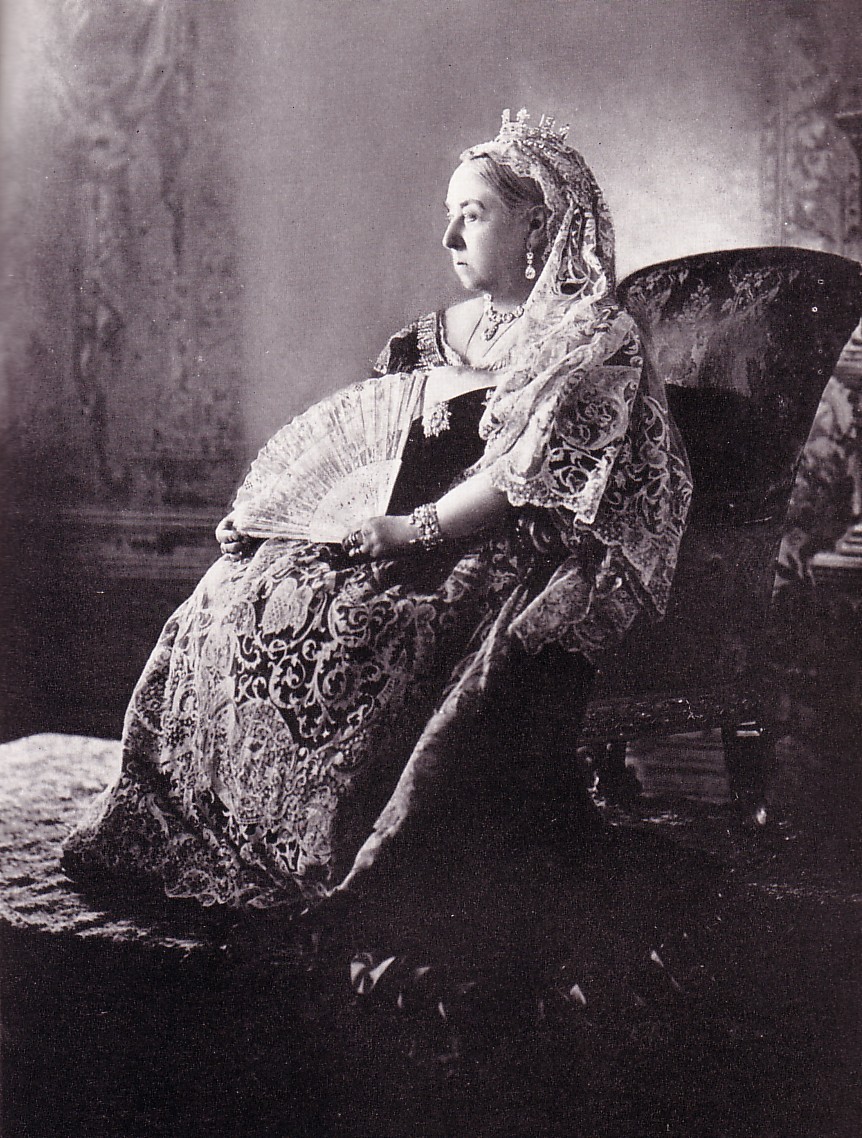
At 6:00 AM on 20 June 1837, Alexandrina Victoria—at the time just 18 years old—was awoken by her mother, Marie Luise Viktoria. Alexandrina was informed that the Archbishop of Canterbury and Lord Conyngham were there to see her. She hurried downstairs and, once alone with the men, Lord Conyngham explained to Alexandrina that her paternal uncle, William Henry, had died at 2:12 that morning. As expected, with no other heir, she was the next Queen of Great Britain and Ireland. Per the young queen’s request, she was henceforth known as Queen Victoria.


Arthur Christopher Benson; Viscount Esher (1907). The Letters of Queen Victoria. Volume 1.

 Years later, on 23 September 1896, Queen Victoria became the longest-reigning monarch in the UK’s history—surpassing other notable kings and queens like Henry VIII, Elizabeth I, and James VI (Scotland) / I (England). 

But she wasn’t done yet: in 1897 Queen Victoria celebrated her Diamond Jubilee, which marked 60 years since her ascent to the throne! The only other monarch to come close at the time was her grandfather, George III, who—despite insanity/dementia, resulting in his being locked away—was king of England for 59 years and 96 days.


Queen Victoria photographed for her Diamond jubilee, 1897

Three-and-one-half years later, on 22 January 1901, at 6:30 PM, Queen Victoria passed away at the age of 81.

Flash forward...

On 6 February 1952, at Sagana Lodge in Kenya, Philip Mountbatten broke the sad news to his young wife, Elizabeth Alexandra Mary, that her father—Albert Frederick Arthur George—had died in his sleep the night before. As the young woman readied to return home, her private secretary, Martin Charteris, asked her to choose a regnal name—unlike Queen Victoria, she stuck with her first name, become Queen Elizabeth II.


Elizabeth returns from Kenya, now a queen!


 Sixth of February 2012—today—marks Accession Day. But, not only does this day mark the anniversary-start of Elizabeth II’s reign, perhaps more significantly it marks 60 years since that fateful day. Yes, Queen Elizabeth II has joined her great-great grandmother (Queen Victoria) as one of only two English monarchs to warrant a Diamond Jubilee celebration! 


Queen Elizabeth II's official Diamond Jubilee portrait—notice the Victoria Monument in the background.

And, at the young age of 85, she’s not showing any signs of slowing down—perhaps she will even surpass Queen Victoria, and become the first UK monarch to celebrate a Platinum Jubilee (6 February 2022). 

Here are some other interesting tidbits about Queen Elizabeth II’s (future) reign:
  • On 10 September 2015, Queen Elizabeth II (at 89 years old) will actually surpass Queen Victoria as the longest-reigning monarch in British and Commonwealth history (as well as the longest-reigning female monarch in world history).
  • On 26 May 2024, Queen Elizabeth II (at 98 years old) will surpass France’s King Louis XIV as the longest reigning monarch in European history.

Now, don’t get me wrong: I recognize that I seem to be celebrating a facet of the monarchial system, and that there are certain inherent problems with the idea of the monarchy (classism, anyone?). And there is, of course, the colonialist and Imperialist side of it all: I’ve got Murphy blood in me, for goodness’ sake, so I get that—I’m not excusing such behavior. Finally, I recognize that not all UK citizens are fans of Queen Elizabeth II and the rest of her family, so don’t expect me to go running around and publically shouting how excited I am about her Diamond Jubilee (excepting circumstances where others are doing the same). 

But, I’m also biased in a way that many non-citizens tend to be—namely, none of my tax money goes to support the Royal Family, so I can sit back and enjoy the idea of it from afar. Also, I happen to live in a country that escaped the yolk of British rule while George III was king, so I’ve never experienced it firsthand. (The grass is always somewhat greener on the other side, right?)

At any rate, what I’m trying to get at is this: yes, I do tend to put rose-colored glasses on when it comes to Britain’s Royal Family—well, at least its queens (and that is a very clear distinction and bias I have)—and I’m trying to reconcile that fact with what I know about the more problematic facets of their status. And here’s what I’ve come up with as I document my attempt at such reconciliation:

As I (somewhat) mentioned in my last post, I grew up watching a fantasy cartoon (He-Man) that depicted a practically utopian kingdom, ruled by a compassionate and just king and queen. At the same time—in the ‘real’ world—I bore witness to US leaders like Reagan and Bush (I), whose fiscal polices reflected zero compassion for the average US citizen, and whose Imperialist…er, militaristic policies resulted in wars and the suffering of people all over the world. So, I think that at some point I might have started to view the monarchy—as represented by Queen Elizabeth II (whose hands seemed, to my young mind, unsullied by the Gulf War)—as being a more civilized institution (again, a concept I recognize as problematic in-and-of-itself).

Or, maybe I’ve just always been fascinated by the idea of the monarchy because my last name is ‘King.’ (And I don’t say that too offhandedly—part of me thinks that it very well could be as simple as that.)

Whatever the answer may be, I think it’s a facet of myself worthy of continued exploration. In the meantime, yes, I will continue to take part in the festivities marking this important historical occasion—please don't hold it against me, friends!
_____

On a totally unrelated note: I’m still sick! BLAH!  

I spent much of the earlier part of today bundled up tightly in a fleece sweatshirt that has a hood. At once point I took the following photo, just to demonstrate to you how miserable I’m feeling:


 I’m convinced that you can see how sick and suffering I am just by looking in the pixilated representation of my eyes.

But, I also wanted to find a way of bridging the theme of this post with my illness-image... and then I realized that I kind of looked a bit like Emperor Palpatine from the Star Wars movies. But I’ll need a Sith name. Personally, I’m leaning toward either Darth Sickheis (‘Sick+he+is') or Darth Grayskull. What do you think?


Feel the illness flow through you... Good; good! Hehehehe...

Yesterday in Culture: US Edition


So, yesterday was the annual US American tradition of gathering around yon television to watch commercials.

Don’t get me wrong, there’s a bit more to it than that: some viewers—namely of the heterosexual male breed—tune in to watch a bunch of savage barbarians beat the tar out of one another. They call this event a ‘Super Bowl.’ Being a slightly more intelligent and civilized chap, I don’t quite get the appeal. From what I gather, however, the objective is to chase down a black-and-white checked pig, kick it through a hoop or net of some type, and then run around the bases before the opposing team’s mascot gives you a strike. At some point while this is all going on, spectators are supposed to divert their attention to a bunch of adorable puppies yapping about which is better: beer that has more taste, or less filling? 

As I said, though, the main purpose of this sporting…spectacle is to celebrate America’s status as a consumerist, capitalistic culture that supports 1% of the population while ensuring that the other 99% of us can’t even afford basic human rights like, y’know, healthcare!

Of course, none of that matters as long as we don’t actually think about it, right? 

As long as we just sit back, and mindlessly consume approximately 60 full minutes of audience-directed marketing, then we’ll all be happy because we don’t have to consider pesky ethical details like the fact that last night's MVP, Eli Manning, earns approximately $16,000,000 (USD) per year for being able to throw a fucking ball, whereas the average citizen of the Democratic Republic of Congo earns just $120 (USD) per year.

But I digress…

The ‘Super Bowl’ has admittedly given us some pretty memorable commercials over the years. For instance, who could forget Apple’s Macintosh ad that riffed on Orwell's 1984? Or Snickers’ humorageist Betty White and hysexistcal Aretha Franklin commercials?

I surely couldn’t!

And last night, they did it again, this time courtesy of MetLife Insurance. (See what I did there? I brought it back ’round to the whole healthcare thing.) 


Now, as you can see, this particular advertisement features some pretty well-known animated figures owned by Warner Brothers (either directly or through subsidiaries)... 

But then there’s also these two:

Captures Courtesy of James Eatock

Now, the question becomes, why are they featured in this advertisement? Is it just good ol’ fun, meant to bring a knowing smile to former fans of He-Man and his fearless friend, Battle-Cat? Or is there more to it?

Let me back up a moment and explain some things—and, no, this has nothing to do with my time abroad, but since I have the platform I’m going to use it to talk about a topic near and dear to my heart: Masters of the Universe (MOTU).

In 1982, Mattel—the makers of Barbie and Hot Wheels—introduced a new 6” toyline called “Masters of the Universe.” The minicomics that came with the original series told of a medieval world (Eternia) wherein science and sorcery merged seamlessly. At the center of this world stood an ancient fortress called Castle Grayskull; and, according to Eternian mythology, (s)he who rules Grayskull also rules Eternia. 

Enter: Skeletor, an extra-dimensional warlord from Infinitia determined to claim that castle as his own (with the added benefit of taking Tee-La, the warrior goddess, as his bride). Also enter: He-Man, a barbarian jungle warrior entrusted with a magical sword and harness by an (occasionally) different goddess figure, and fated to be Eternia’s true king one day. (And husband of Tee-La—duh!) 


From "The Vengeance of Skeletor," courtesy of He-Man.Org

From "He-Man and the Power Sword," courtesy of He-Man.Org


As a rule, the Eternians were safe thanks to He-Man and his friends. But something was happening here on Earth that muddied the waters a little. (And, no, I’m not talking about the controversial fact that DC Comics decided to position He-Man as a bi-terrestrial character—his mother, now Eternia’s queen, was apparently from Earth.)


"To Tempt The Gods" (DC Comics' MOTU Series, Part 1 of 3, p. 4)

No, the real danger was US President Ronald Reagan's neoliberal policies. With help from Mark S. Fowler—his flunky at the FCC—Reagan started dismantling the FCC’s power to regulate certain types of marketing.

Suddenly, Mattel—and others, to be sure—found itself able to market directly to children in ways that it had never been able to do before. Enter: the half-hour toy commercial (a.k.a. modern cartoons), ensuring that He-Man and his friends would be duking-it-out with the forces of evil five days a week!


Image Courtesy of He-Man.Org


From 1983-1985 (and then afterward courtesy of repeats), Mattel—through Filmation—brought the adventures of He-Man and the Masters of the Universe into the homes of boys and girls across the Western world. But, being capitalists at heart, the big bosses at Mattel realized there was more to the children’s market than just little boys!

Enter: She-Ra, the Princess of Power (POP) and He-Man’s twin sister—and a toyline that was, from the bosses’ perspective, aimed at girls. (This latter fact is highly debatable, as there are many boys who collected the POP toys, just as there were girls who collected the MOTU toys.) The initial She-Ra series ran from 1985-1987, but, like its sibling-show, continued afterwards through repeats.

The MOTU mythos relaunched itself again—accompanied by fresh toylines—in 1990(-1991) and 2002(-2004), and the property even saw a live-action movie produced in 1987 courtesy of Warner Brothers.

Supported by an active fan-community (and yet another toyline, now in its fourth year), the MOTU property has been with fans almost constantly for the last 30 years. And, rumor has it, that Mattel plans to make the property’s 30th spectacular.


Not only is there brand new artwork and other collectibles, but references by Mattel officials to big and exciting things down the road  Could that include a new MOTU cartoon, which what we see in the MetLife commercial is a preview of? Fans like myself are certainly hoping so! 

Now I want to move on to the other big story from yesterday’s baseball match, or whatever it was: the half-time show.

One word: Madonna.

Another word: Awesome.

Rumor has it, the Material Girl pulled her hamstring right before the show, but that didn’t stop her from putting on a great performance, which included bits from fan-favorites “Vogue,” “Music,” and “Like a Prayer.” (NB: Those individual links take you to my favorite versions of each song!)

Yet, as much as I love Madge (excepting her acting ‘abilities’), I’m not here to talk about her performance. Rather, I want to talk about her wardrobe choice.

For your convenience, I’ve embedded her performance last night. You don’t have to watch the whole thing, but, at the very least, watch her during the opening (“Vogue”) segment, and pay special attention to her ensemble:


It didn’t take long for me—and numerous others—to drop our jaws when we saw her. “What’re you lookin’ at?” you may join the immaculate Madonna in asking. The answer is, first and foremost, her headdress. Next it’s her golden cape. And then the rest.

Almost immediately, my stateside MOTU/POP-friends went to the Facebook store and started posting comparison images like the one seen here:


The Material Princess?

That’s right: we were comparing her to She-Ra. (See, I really do try to make these posts come full-circle!) 

And I agreed initially, but it didn't take long for me (and others, to be fair) to realize that the comparison was close but still a touch off…

And then I (we) remembered the Bubble-Power She-Ra variant from the original and MOTUC toylines:


Image Courtesy of Fwoosh
Left: Original Bubble-Power She-Ra Art by Nightwing / Right: Bubble-Power Madonna?

 Perfect comparison!

Now, do I think the homage was intentional? No. 

Would I love to find out that She-Who-Must-Not-Act-Again and Mattel planned this whole thing out as part of the MOTU 30th Anniversary celebration? Abso-freakin-lutely!

All right, kiddies, I think I’ve blathered on enough about all of this. I could go on and on—I haven’t even touched upon the various ideologies MOTU and POP viewers were inculcated with over the last three decades!—but I won’t.

Besides, I need to start writing my next entry, which is a look at part of the UK’s culture happening this very day…